Pages

Subscribe:
Showing posts with label Nutritious. Show all posts

Omega-3 Supplements Don’t Lower Heart Disease Risk After All

If you want to protect your heart, stick to exercise and a healthy diet, and pass on the fish oil pills, says a new study.

For years, doctors and health experts have recommended taking fish oil supplements, rich in omega-3 fatty acids, to lower the risk of heart disease. But the latest study on the issue — an analysis of previous clinical trials on the effects of omega-3s — shows that the supplements don’t lower users’ risks of heart attack, stroke, sudden death or death from heart disease or any cause. Although the rates of these events were lower among those taking omega-3 supplements compared with those not taking them, the differences were not statistically meaningful, the authors said.


Omega-3 Supplements Don’t Lower Heart Disease Risk After All


It’s not the first time that the cardiovascular benefits of fish oil have been questioned: another recent analysis of previous research found that the supplements didn’t prevent heart attack or stroke in people with heart disease. (Separately, other research has suggested that that pills have little effect on boosting memory in Alzheimer’s patients, reducing symptoms of the disease or improving thinking and verbal skills compared with placebo.)


In the current analysis, published in the Journal of the American Medical Association and led by Dr. Moses Elisaf of the Lipid Disorders Clinic at the University Hospital of Ioannina in Greece, the scientists reviewed 20 studies dating back to 1989 that involved 68,680 participants. Volunteers in the studies, most of whom were heart patients, were randomly assigned to take either 1.5 g of omega-3 supplementation or a placebo every day for about two years. They were followed for heart events, including death, heart attack and stroke.

While the omega-3 users showed a 9% lower rate of heart-related death compared with the controls, and an 11% lower rate of heart attack, these differences were too small to attribute to the omega-3 pills.

The findings may lead to some confusion among people — both heart patients and those who are healthy but trying to avoid heart disease — who may be taking omega-3 supplements daily. While some early studies did show a significant benefit from taking fish oil pills, data from newer clinical trials weakened that effect. That may be because at least one early, important study did not blind participants or researchers, meaning that everyone knew who was taking omega-3s or placebo. Further, inconsistencies between the included trials, such as the dosages of supplement used or preexisting conditions among participants, may have contributed to the discouraging findings.

Much other past data showing benefits of omega-3s also came from studies that did not randomize participants into fish oil and placebo groups, and instead retrospectively compared heart events in people who chose to consume more omega-3 fats than others.

Another reason the current study failed to find a benefit may be that more people are using better treatments for heart disease these days, including cholesterol-lowering statin drugs. Elisaf says he wasn’t able to eliminate the potential influence of these medications in lowering rates of heart attack and death from heart disease overall. “We need more data in order to have a clear answer about the role of omega-3 fatty acid supplementation in everyday clinical practice,” he says.

The authors acknowledge that additional research may help determine whether omega-3 supplements may still benefit people depending on their individual risk of heart disease, or if their diets are low in foods that are naturally rich in the fatty acids.

Currently the American Heart Association (AHA) advises people with high triglyceride levels to eat more fatty fish — the omega-3s in oily fish help boost good cholesterol and lower triglycerides — but to discuss supplementation with their doctor if they can’t get enough from their diet. The organization does not recommend the pills in general as a way to protect the heart.

Both the AHA and many doctors recommend eating more fish, however: everyone, including healthy people and heart patients, should eat at least two servings of fish per week to benefit from the omega-3 fats. “If people are taking supplements because their physician prescribed them, they should consult with their physician before stopping,” says Dr. Donna Arnett, president of the AHA and professor of epidemiology at the University of Alabama at Birmingham. “But I would tell them they should not stop eating fish. The results of this study are about dietary supplements. So dietary sources of omega-3s may be different than supplements. They should not assume that dietary sources are not useful.”

Which means that the advice you’ve been hearing all along remains the same — eat more fish. It’s good for your heart.


Source : http://healthland.time.com/2012/09/12/omega-3-supplements-dont-lower-heart-disease-risk-after-all/

The Naptime Chef’s Fall Recipe for Foodies Who Are Also Harried Parents

Four years ago, when my first child was born, I started teaching the foodie in me how to be a pragmatic parent. I set out to streamline my husband’s and my favorite recipes so they could be made during naptime or any other precious little downtime I had. I nicknamed myself the Naptime Chef and started blogging about these early attempts at simplifying dishes without sacrificing flavor — attempts that led to me scraping more than my fair share of food into the garbage. But with a little practice, I came up with some great family-friendly recipes and in March published my favorites in my first cookbook. Maybe I’ll whip up a sequel after baby No. 2 arrives in January.


In the meantime, it’s apple season now, my favorite. I do my best to incorporate the fruit into just about every meal possible. From apple pancakes to apple cheddar soup, name your favorite food and I’ll add apples to it.

The beauty of my apple cake is that it is a simple one-bowl affair with only the most basic of stirring required. The preparation fits so perfectly into our hectic daily routine it makes an apple pie look positively arduous. Why bother coring and slicing half a dozen apples when you can get the same amount of flavor from simply chopping up two of them and pouring some batter into a pie plate?


I often whip this cake up before school while my daughter is eating breakfast. It’s delicious and it really can be made whenever you have 10 minutes to spare.

Ingredients
1 cup granulated sugar
1 ¼ sticks unsalted butter, melted and cooled
2 large eggs
2 teaspoons pure vanilla extract
1 cup all-purpose flour, sifted
½ teaspoon kosher salt
2 apples (Gala or MacIntosh are best), peeled, cored and chopped into 1-inch chunks (about 1 cup)
Confectioners’ sugar for dusting

1. Preheat the oven to 350F. Butter the bottom and sides of an 8-in. pie plate, or baking dish of equal size, and set aside.

2. In a large bowl, add the melted butter and sugar and stir well. Then, stir in the two eggs and the vanilla extract until completely incorporated.

3. While slowly stirring, pour in the flour and kosher salt and stir until the flour is just combined and no longer visible. Do not overmix the batter.

4. Scatter the fruit evenly in the bottom of the buttered baking dish. Pour the batter over the fruit and use a spatula to spread it evenly on top.

5. Bake the cake for 40 to 45 minutes, or until the top is golden brown and a cake tester inserted comes out clean. Allow the cake to cool completely in the pan. Before serving, dust lightly with confectioners’ sugar.


Source : http://healthland.time.com/2012/09/12/apple-cake-the-naptime-chefs-fall-recipe-for-foodies-who-are-also-harried-parents/

Healthy eating for children, Best Nutrition

Although their growth is slower than in infancy, school-aged children still have high nutritional needs but fairly small appetites. So it's crucial all meals and snacks continue to be rich in nutrients and energy. The food choices children make during the crucial years of development can influence their future health risk and can also influence food habits in later life.


A structured eating plan with regular meals and snacks is important to establish good eating habits. Ensure there's also plenty of variety - burgers and chips are fine occasionally, but not for every meal.

A limited number of foods makes it difficult to obtain the full range of nutrients. Make sure your child has a range of foods based on each of the main food groups.
 
Energy

School children still have a high energy requirement for growth and activity, but increasing numbers are becoming overweight. This is because they’re eating too many calories and not being active enough to use up the extra energy they’ve eaten.

If you think your child is putting on too much weight, don't make a big issue of it. Instead, encourage physical activity in whatever form (football, netball, walking the dog, cycling, swimming and so on).

Base meals and snacks on the five main food groups, but limit fatty and sugary snacks.

An overweight child still needs a nutrient-packed diet that provides all the essential building blocks for growth and development. Encouraging healthy eating should ensure children maintain a healthy weight. Make sure the whole family is eating healthily to provide good role models.
 

Calcium

This mineral is important for healthy bone development. Good sources include dairy products such as milk, cheese, yoghurt and fromage frais, as well as fortified orange juice, green leafy vegetables, cereals, sesame seeds and tofu.

Your child should ideally aim for three servings of calcium-rich food a day - for example, a 150ml glass of milk, a small pot of yoghurt and a small matchbox-sized piece of cheese.
 
Folate

This vitamin is important for growth, but intake is low in some children, especially those who skip breakfast because fortified cereals are a good source of folate. Other sources include bread, green leafy vegetables and pulses.
 
Iron

This mineral helps to keep red blood cells healthy. Insufficient iron intake can lead to iron-deficiency anaemia, but this is much less common in primary school–aged children than their younger and older siblings.

Good sources of iron include red meat, liver, fortified breakfast cereals, beans and pulses.

To help absorb the iron more effectively from non-meat sources, combine it with vitamin C-rich foods such as citrus fruits and fruit juice.
 
Fatty and sugary foods

This group includes spreading fats (such as butter), cooking oils, sugar, biscuits, cakes, crisps, sweets, cream and ice cream, chocolate and sugary drinks. These foods shouldn't be eaten too often and, when they are, should only be consumed in small amounts.

They're loaded with calories, fat and sugar, and don't necessarily contain many vitamins and minerals. Also, sugary foods and drinks (including fruit juice) can increase the risk of dental decay.

Limit the amount of sugar and sweets eaten, and offer them at the end of meals, rather than in-between.

Some sugar-free or diet drinks can also cause decay because of their acidity. Milk or water is the best drink between meals.


Source : bbc

The Best Nuts to Eat for Nutrition

Including nuts in your daily diet is good for your heart and can lessen the risk of heart disease. Nuts contain high amounts of unsaturated fats, which help clear out your arteries and promote healthy colon function. In addition, nuts are high in fiber, keeping you feeling full for longer than many other snacks. While all nuts are beneficial to your health, some nuts are higher in nutrients than others. 


Almonds

  • Almonds are high in magnesium, potassium and vitamin E. In addition, almonds contain a very low amount of unhealthy fat and promote healthy colon function. One-quarter cup of chopped almonds contains approximately 150 calories and 25 percent of your daily magnesium requirements. Consider adding walnut slivers into your favorite salad, or sprinkling them over a cracker with cheese.

Walnuts

  • Walnuts are one of the best nuts to add to your diet as they contain high amounts of omega-3 fatty acids. According to the Mayo Clinic, omega-3 fatty acids promote a healthy heart and have anti-inflammatory properties that lessen the effects of asthma and arthritis. One serving, or 8 oz., of chopped walnuts contains approximately 180 calories. Try adding one serving of chopped walnuts to your favorite cookie recipe or eating them with your morning cup of coffee.

Pecans

  • Pecans are a nutrient-rich nut that you can add to your diet to boost your consumption of over 19 vitamins and minerals. The nutrients in pecans include zinc, magnesium, vitamins E and A, copper, potassium and vitamin B. According to the website sixwise.com, just 3/4 cup of pecans each day can lower bad cholesterol and help clear your arteries. One serving of pecans contains approximately 200 calories. Add pecans to your favorite cookie or bread recipe, or eat them as a side with your morning toast.

Cashews

  • Cashews are one of the lowest-fat nuts that you can add to your diet. Cashews contain high amounts of copper and zinc, both essential nutrients for your body. One ounce of dry-roasted cashews contains approximately 160 calories. Try eating cashews on their own or sprinkling them over a chicken breast before baking it.

10 Foods to Make You Happier

We’ve all had a rotten mood. For many people, eating food (such as junk food) can make their health worse; which only worsens their mood.
But what if there was food that was healthy, and could also act as a natural anti-depressant? There are foods that meet those qualifications! Here are the 10 best foods, that will make you happy, and keep you healthy:

10. Swiss Chard
This little-used vegetable contains a lot of magnesium. Magnesium is a nutrient that is a vital part of the biochemical reactions that increase energy levels in the human body. 

A study in 2009 in the “Australian and New Zealand Journal of Psychiatry” discovered that lower magnesium levels were associated with higher depression scores.


9. Blue Potatoes
Blue Potatoes aren’t exactly a commonplace produce to find in a grocery store. However, they have powerful antioxidants known as anthocyanins; anthocyanins provide neuro-protective qualities, like reducing the brain inflammation that is commonly associated with depression, and boosting short-term memory. Your thyroid gland is maintained, as well, by the iodine found in the peel.

8. Mussels
Mussels have moderate to high amounts of Vitamin B12, Selenium, Iodine, protein, and Zinc, while being low in calories and fat. The Iodine helps to, as previously mentioned, support the thyroid gland, which helps to regulate mood and weight; the Selenium and Zinc help the thyroid gland, as well. The Vitamin B12 helps to strengthen and insulate a person’s brain cells, which keeps the brain sharp over time.
Note: Be sure to eat farmed mussels rather than wild mussels, as this will not only benefit your health, but the health of the environment as well.

7. Dark Chocolate
Yes, you read that correctly. Dark chocolate has benefits that milk and German chocolate do not have. Dark chocolate improves the blood-flow to the brain, and provides an instant boost in concentration and mood. This will help you to feel more energetic and vibrant. However, don’t go overboard: The “Journal of Psychopharmacology” says that all you need is a few ounces of dark chocolate each day to reap the benefits.

6. Greek Yogurt
Calcium – which Greek yogurt has large amounts of (more than milk) – helps a person’s brain by causing it to release happiness-inducing neurotransmitters. Greek yogurt also has more protein than regular yogurt, which makes weight-loss easier.

5. Asparagus
Asparagus has high levels of folate and tryptophan. Low levels of folate have been linked to depression in half of all cases of depression, according to recent research. Tryptophan is also used by the brain to make serotonin, which is one of the human brain’s main mood-stabilizing neurotransmitters. Note: Turkey is also a great source of tryptophan. While it has been known to make people sleepy during Thanksgiving, the tryptophan requires calories in order to activate its sedative-like effects.

4. Honey
In regards to health, honey is far better than regular sugar. Honey contains kaempferol and quercetin, which helps to prevent depression (and keep your brain healthy) by reducing inflammation in the brain. It also won’t send your body into “fat-storage” mode, like regular sugar can, by having less of an impact on blood-sugar levels.
 
3. Cherry Tomatoes
All tomatoes have a substance known as lycopene. Lycopene is an antioxidant that fights inflammation in the brain and generally protects the brain. For best results, eat them with olive oil; olive oil helps to increase the absorption of lycopene.
 
2. Eggs
Eggs contain moderate-to-large amounts of Zinc, Vitamin B, Iodine, Omega-3 Fatty Acids, and protein. Not only can eggs keep you energized, they can also keep you full (stomach-wise) for longer! A 2008 study in the “International Journal of Obesity” found that people who had eggs for breakfast lost considerably more weight, compared to those who ate bagels for breakfast.
 
1. Coconuts
Despite the fact that coconuts are most commonly found in unhealthy desserts, coconuts do contain medium-chain triglycerides. Medium-chain triglycerides are special fats that fuel better moods and promote general brain-health. Note: Coconut milk, on the other hand, is actually pretty unhealthy. Stick with unsweetened coconut shavings.
 
Source : http://listverse.com/2012/03/28/10-foods-to-make-you-happier/

Salmon, Super Foods For Pregnant Women

Salmon consumption was found to increase the health of pregnant women and fetus. The findings of the scientists from the University of Granda showed that consumption of two servings of salmon a week to promote the health of pregnant women and infants as a whole.

Scientists found that increasing levels of intake of salmon omega-3 fatty acids and increase the antioxidant defenses in pregnant women and infants. Consumption of salmon is also known to not change the level of oxidative stress, inflammatory response and homeostasis (resistance) vascular.

In the study, researchers used a random sample of pregnant women are low levels of fish consumption. Samples were divided into two groups. The first group, the diet of pregnant women to apply as they do. While the second group, pregnant women were given the consumption of two servings of salmon from 20 weeks gestation until the specified time limit.

Salmon used in this study have been preserved and given a special diet so that salmon have a high content of omega-3 fatty acids of high and low contamination.

Blood and urine samples

Furthermore researchers took blood and urine samples from the two groups. Participants were also asked to fill out questionnaires about what they eat at weeks 20 and 34 of gestation, which will provide information about food intake during the previous 12 weeks.

Furthermore, blood and urine samples of participants drawn back into the 38th week of gestation. The result showed that the concentration of omega-3 fatty acids increased in pregnant women given intake of two servings of salmon each minggnya.

Similar results were also seen in newborns. Two servings of salmon each week to help mothers and their children reach the intake of omega-3 fatty acids in accordance with the recommendation.

The experts also found, and lipid oxidation biomarkers for oxidative damage to DNA is not affected by intake of salmon. Thus, researchers concluded that eating two servings of salmon a week during pregnancy does not increase oxidative stress.


Source : EurekAlert

Choosing The Right Foods Based on Blood Type

To find out if the food you eat according to the requirement or not, seems to be heavily influenced by blood group type. Yes, every blood type is believed to have different responses to what you consume.

Dr. Peter D'Adamo, a naturopathic physician and expert in the field of human blood groups revealed that each blood group antigen which react to produce every kind of food. D'Adamo said, the consumption of foods that do not cause a reaction both to the blood type can cause fatigue, fluid retention and weight problems.


Meanwhile, if you eat foods that are compatible with your blood type, this will help increase energy, prevent disease and reduce weight. Here is a glimpse of the types of food that seseuai with blood type, as described by D'Adamo:

Blood Type O 
Blood type O is one of the most common blood type and amount than most other types of blood groups. About 45 percent of Americans known to have blood type O. Based on the type of food, people with blood type O is suitable for eating a high protein-rich meat. Individuals with blood group O had more gastric acid than other blood types, which makes them better suited for digesting meat.

Blood Type A 
According to D'Adamo, a person with blood type A is best suited for eating vegetables vegetarian alias, because they do not have enough stomach acid to digest meat. Vegetable protein diet such as beans, legumes, soy foods and complex carbohydrates are suitable for you who have blood type A.

Blood Type B
Corn, wheat, lentils, tomatoes, peanuts and sesame seeds are foods that can affect metabolism and cause fatigue and fluid retention. People with blood type B should also avoid eating chicken, because it has a lectin in muscle tissue and cause unfavorable reactions with their blood type. Adamo advised to eat lots of vegetables and select types of meat such as lamb, rabbit and venison.

Blood Type AB
Type AB is the rarest blood type. In America, only about 5 percent of the population has this blood type. Given the mixture of blood group genes you inherited, so it is best suited to your diet is to eat a mixture of seafood, wheat and vegetables. According to D'Adamo, individuals with blood type AB have less stomach acid levels are sufficient for the digestion of meat, but they can eat fish. D'Adamo says, green vegetables, fish and low fat milk is a food that is right for them with blood type AB.

Source  : LiveStrong

7 Super Foods for Women's Health

Some specific foods known to have the ability to ward off disease. Nutritionists call it a super food. Here is a 7 (seven) to get the best food in your diet program, especially for women to prevent the risk of diseases such as osteoporosis, heart disease, cancer of the cervix, and breast cancer.

1. Tomatoes
As is known, the red fruit is rich in lycopene content that plays an important role in warding off breast and cervical cancer. Even a study showed the consumption of tomato can be heart healthy. After looking at almost 40,000 women, researchers from Boston concluded, lycopene also protects the heart. To increase levels of antioxidants and lycopene, are advised to eat tomatoes after cooking.

2. Flax
Flax seed (a type of hemp, such as sesame, Linum usitatissimum) is a food rich in benefits. Flax is basically divided into two varieties, the brown and golden flax. Flax is usually turned to industrial linen and linseed oil.

The experts from the Mayo Clinic found that 40 grams of flaxseed can reduce the symptoms of heat stroke are often experienced by menopausal women. Some reports indicate hemp can lower "bad" cholesterol or LDL and triglycerides. In a study in China known to the more obvious benefits in women. Meanwhile, in brown or golden flax, play a role in the fight against breast cancer.

Warning: Pregnant women and nursing mothers should not be eating flaxseed.

3. Cabbage
Many health benefits can be obtained from the vegetable on this one, especially for women. Cabbage contains antioxidants such as lutein and zeazanthin that serves to protect the eyes. In addition, cabbage is also a good mengadung vitamin K in bone builder. The researchers found that women who eat a diet rich in vitamin K, have a lower risk of hip fracture.

4. Salmon
Salmon is included in the omega-3 smber best. In pregnant women, studies show that fish oil (omega-3) also helped in overcoming postpartum sadness. Other benefits include improving the function of neural connections in the brain of the fetus.

5. Cranberry juice
Cranberry is a natural remedy that is believed to treat urinary tract infections UTI in women and has been widely recommended by experts. This fruit contains antioxidants that work to prevent bacteria from sticking to the bladder wall, which is a breeding ground for bacteria and cause infection. The findings are based on results of recent studies that examined the concentration of cranberry extract.

The right dose: Varies. But you should drink cranberry juice that is 100 percent fresh (60 calories per cup) to avoid excess sugar.

6. Greek Yogurt
Most of of you might not know much about Greek Yogurt. Yogurt is different from yogurt in general. Greek yogurt offers twice the protein is better (than other types of yogurt) with a little sugar.

Low levels of carbohydrates also helps us keep the blood sugar remains stable. In addition, studies show that foods with high protein levels (30 percent of calories) helps women to lose weight and maintain muscle.

7. Walnuts
Recent studies have shown, only eating two ounces of walnuts per day to help slow the progression of breast cancer and slow tumor growth (results of tests on mice). Walnuts contain an antioxidant called phytosterols, which have an important role in the fight against cancer. In fact, omega-3 fats in walnuts effective in preventing excessive bone turnover that makes bones strong and healthy.


Sources: FoxNews

10 Quick And Healthy Breakfasts To Go

Although breakfast is considered to be the most important meal of the day, many people skip it because they feel pressed for time before they go to work or school. Out of those who do eat breakfast, many choose convenience over nutritional value and choose to eat a doughnut, pastry or a fast-food breakfast sandwich.

1. Peanut Butter Pita

Peanut butter is high in protein, which is an ideal nutrient to consume in the morning. Studies show that a protein-packed breakfast will make you feel full for a longer period of time and, therefore, will reduce your cravings for snacks throughout the day. It will also reduce the brain signals related to food motivation and reward-driven eating.
To make this meal, spread some peanut butter on whole wheat pita and top with some banana slices and wheat germ, which is a good source of iron and zinc. You can stuff everything inside the pita pocket to make it easier to transport and you can also experiment with different types of nut butters and fruits.

2. Peanut Butter Waffle

Instead of drenching your waffle in butter and syrup, spread some peanut butter on it. It would be best to make your own waffle, but if you have to use the frozen kind, choose a waffle that contains whole grains, which will stabilize your blood sugar and will make you feel fuller, longer. To add a little pizzazz, sprinkle some chopped nuts or raisins on top.

3. Egg Sandwich

Those egg-and-muffin sandwiches that you get at fast-food restaurants are full of fat, particularly saturated fat. Make your own egg sandwich instead, with a whole wheat English muffin or whole wheat bread. Use the entire egg, including the yolk, which contains the muscle-building vitamin B12. You can even add a few slices of turkey-bacon for a protein boost, or substitute your egg with tofu for a vegetarian breakfast.

4. Cereal And Yogurt

Cereal and milk is a great breakfast, but it’s a little tough to eat while commuting to work. Instead of using milk, mix bran flakes or granola clusters into a container of yogurt. Yogurt is high in calcium, phosphorus, vitamin B12 and protein and, it also contains live bacteria cultures that can rev up your immune system.

5. Vegetarian Breakfast Burrito

If you want to add a little kick to your morning, try this breakfast burrito. In a whole wheat tortilla, roll up some slices of a hard-boiled egg, green peppers and avocado. For a spicy kick, add a spoonful of salsa, which is full of vitamin C. What makes this breakfast fun is that you can mix and match different fillings.

6. Veggie Egg Scramble

If the breakfast burrito doesn’t satisfy your egg craving, make this instead. While a traditional omelet may require extra time and care, it’s a lot faster to scramble some eggs and throw in the same ingredients you would use in your omelet. Use vegetables like green peppers, olives and mushrooms. Add in tomatoes, which are heart healthy and whatever other vegetable you like.

7. Vegetable Pancakes

This breakfast options ensures that you get a daily serving of vegetables. Combine a half-cup of flour with an egg and a quarter-cup of milk. Add in carrots, zucchini, cabbage and some scallions for a little zest. Carrots are a good source or carotenoids, which the body turns into vitamin A, while zucchini is a good source of vitamin C and cabbage can lower your cholesterol levels.
Although you may not have time to make a batch of pancakes in the morning, you can make them ahead of time and freeze them. You can also add in any other vegetables you choose.

8. Brie-Raspberry Panini

Studies show that eating cheese for breakfast may help to lower your cholesterol levels. So melt some brie or some mozzarella on whole wheat bread and add some raspberry preserves or, better yet, fresh raspberries. Raspberries are high in vitamin C, magnesium and fiber and contain antioxidants that can prevent the development of macular degeneration and even cancer.

9. Blueberry Scones

Scones are delicious and a little indulgent, so in order to put a healthy spin on them, fill them up with fresh blueberries, which are rich in antioxidants. Use whole wheat flour, oats and flaxseed to get a dose of fiber and omega-3 fatty acids. Make a few variations with cranberries, which prevent bacteria from attaching to the urinary tract and stomach lining, and blackberries, which are a good source of vitamin E, vitamin C, vitamin K, folate, potassium and magnesium. Whip up a batch of these for the week, so you have a breakfast treat you can grab and eat on the go.

10. Strawberry-Banana Smoothie

Strawberries are a good source of vitamin C and antioxidants, and bananas are a good source of potassium and fiber. Blend a handful of strawberries and a frozen banana with one cup of cow’s or soy milk and a spoonful of protein powder. This smoothie is great by itself or when paired with any of these quick and healthy breakfast ideas.
Make sure you do a little prep work the night before or sometime earlier in the week for some of these breakfast ideas to help save you time. The great thing about these quick and healthy breakfasts is that most of them don’t require you to sit down and eat them with utensils.

Source : http://www.symptomfind.com/nutrition-supplements/quick-and-healthy-breakfasts/

7 Vitamins Sharpen Your Memory

Forget or do not remember is a condition that almost everyone had experienced. For example, when put phone, keys or sunglasses. Maybe you consider this to be a reasonable. But you need to know that "forgetting" is one characteristic that indicates the reduced ability of the brain to process the memory.

How to prevent it? Quite simply, namely by taking some form of vitamins such as those mentioned below. Here are seven vitamins that can help cure while improving your memory:

1. Vitamin E
Research has shown that the antioxidant properties of vitamin E may help protect nerve cells in the brain from damage. There is also evidence to suggest that vitamin E can keep the nerve cells in the brain of post-stroke mortality. Vitamin E is also believed to help improve memory function in the elderly. But before taking vitamins is a good idea to consult with a physician. Because high doses of vitamin E can interfere with the work of a drug for blood clots.

2. Vitamin B6
In addition to keeping the various functions of the body, vitamin B6 has been shown to improve memory, while also supporting brain health. Research shows that daily intake of vitamin B6 can help improve your memory from time to time, and the brain's ability to process information at a faster rate. You can get natural sources of vitamin B6 from tuna fish, eggs, carrots and vegetables.

3. Vitamin B12

Research has shown that vitamin B12 can maintain blood levels of homocysteine ​​at a healthy level. Homocysteine ​​is an important amino acid needed by the human brain. If amino acids are not well managed it will affect the decrease in brain function. This vitamin also has the ability to improve the brain's nerve fibers. Beef, liver, shellfish and fish contain large amounts of vitamin B12.

4. Vitamin B9

Folic acid, also known as vitamin B9 may help in the production of red blood cells, which allows one to obtain the supply of oxygen to the brain more. This vitamin has also been shown to reduce the risk of memory loss associated with aging. Natural sources of vitamin B9 can get from eating food made from grains, or drinking juice made from citrus fruits or tomatoes.

5. Vitamin C

The antioxidant properties of vitamin C is very beneficial to keep your memory health is maintained. A recent study has found a correlation between memory problems and babies who are deficient in vitamin C. Another study found vitamin C has a protective nature of memory problems and loss of mental alertness. Fruits and vegetables are excellent sources for vitamin C, especially citrus and strawberries.

6. Vitamin D

Body is deficient in vitamin D has been shown to interfere with the brain's ability to plan and process memory. Research shows that vitamin D levels decline in the elderly has been associated with memory loss due to the aging process. You can meet the needs of vitamin D from mackerel, tuna and other foods are fortified with vitamin D.

7. Vitamin B3

The experts are superbly find a particular form of the vitamin B3 Nicotinamide, which is believed to reduce the symptoms of Alzheimer's disease. Given these new findings tested in mice, further clinical testing is needed to determine the effect of vitamin B3 in humans. In addition to reducing the risks and effects of Alzheimer's disease, vitamin B3 also reduce the risk of heart disease and lowering LDL cholesterol. Tuna, chicken, turkey, salmon and asparagus provide an important source of vitamin B3.

Source : kompas.com

Why We Need Vegetables

Article courtesy of Donna Hargrove, D.O., Nutrition EditorEven though everyone knows that vegetables are good for you, 7 out 10 Americans still do not meet the daily recommendations for vegetables.  And, Americans are eating less today than 10 years ago.  Consumers say their main reasons for not getting enough vegetables are not liking the taste, inconvenience, high cost, and low availability.  However, there are plenty of easy, delicious and convenient ways for people to get more vegetables.


WHY DO I NEED VEGETABLES?
Vegetables are an essential part of a healthy diet.  Eating the recommended amount of vegetables can help to reduce the risk of heart disease, diabetes, and some cancers.  Vegetables are also naturally lower in calories than other foods and therefore important in weight management.


Vegetables provide essential nutrients and most are low in fat.  They are an important source of potassium, magnesium, dietary fiber, folate, and vitamins A and C.
  • Potassium:  Helps maintain healthy blood pressure 
  • Magnesium:  Necessary for healthy bones, muscles and for healthy blood pressure 
  • Fiber:  As part of an overall healthy diet, helps reduce cholesterol levels and maintain digestive health 
  • Folate:  Helps the body form healthy red blood cells 
  • Vitamin A:  Keeps eyes and skin healthy and helps protect against infections 
  • Vitamin C:  Helps heal cuts and wounds, keeps teeth and gums healthy and aids in iron absorption

WHY ARE EATING DIFFERENT COLORED VEGETABLES IMPORTANT?
Think variety and think color.  Eating a variety of vegetables allows you to get a range of nutrients.  Different colored vegetables provide varying amounts of vitamins, minerals and phytonutrients that provide unique health benefits.  The phytonutrients are responsible for the colors of vegetables.  Vegetables can be classified into color groups, such as Red (tomato), Orange (carrots), Green (spinach), White (onions, mushrooms), and Purple (cabbage).  Phytonutrients work best when eaten together in a whole food.  So, eating a wide variety of different colored vegetables provides greater health benefits than eating only a single type of vegetable.

HOW CAN VEGETABLES HELP MANAGE MY WEIGHT?
Eating foods like vegetables can help with weight management by adding bulk without a lot of calories.  Eating bulker foods like vegetables helps people feel full and eat less over the day.

HOW MUCH DO I NEED?
The amount you need depends on your age, gender and how active you are.  Most women should eat about 2 ½ cups of vegetables daily, men 3 cups, and children aged 4-8 years 1 ½ cups.  In general, 1 cup is equal to 1 cup chopped or cooked vegetables, 1 cup vegetable juice, or 2 cups raw leafy greens.

EASY WAYS TO GET MORE VEGETABLES
  • Add vegetables or vegetable juice to soups, pasta dishes or casseroles 
  • Stock up on frozen vegetables for quick and easy cooking 
  • Drink vegetable juice as a snack or as a beverage with your meal 
  • Buy pre-cut vegetables for quick salads and snacks

Source : nutritionhealthnet.com

Orange juice can Disrupt Performance Drugs, really?


Orange juice can Disrupt Performance Drugs, really?...
If you're a big fan of citrus fruit or juice, but on the other hand are undergoing long-term treatment and should be taking some kind of medication, you should be careful. Why? Because the fruit is rich in vitamin C can affect and disrupt the work of medicine.


Katherne Zeratsky, a nutritionist from the Mayo Clinic say, orange juice or other citrus products may interfere with some types of medication. Zeratsky said, although the interaction caused quite mild, but in some cases this could have serious consequences and lead to health problems.


He also urged everyone to consult a doctor or pharmacist before eating grapefruit (citrus) fruit juice or other products if you are taking various drugs. Where possible, it would be better if you do not eat oranges at all. While you take the medicine and grapefruit products in different time interaction will still be there.


Zeratsky revealed that there are certain chemicals contained in citrus fruits that can interfere with the metabolism of various drugs in your digestive system. These conditions can jeopardize your treatment and cause serious side effects.


In addition there are many more citrus foods that can trigger drug interactions. Here are some examples of prescription medications that can trigger serious interactions if taken bersamaa with citrus products. For more details, you can consult your doctor or pharmacist to see whether the drugs you consume also has interactions with what you eat often:
  • Anti-anxiety: Buspirone
  • Anti-arrhythmia drugs: Amiodarone (Cordarone)
  • Antidepressants: sertraline (Zoloft)
  • Antihistamines Fexofenadine (Allegra)
  • Anti-retrovirals: Saquinavir (Invirase), indinavir (Crixivan)
  • Anti-seizure drugs: Carbamazepine (Carbatrol, Tegretol)
  • Calcium channel blockers (used to treat hypertension): Nifedipine (Procardia), nimodipine (Nimotop), Nisoldipine (Sular)
  • Immunosuppressant Cyclosporine (Neoral, Sandimmune), Tacrolimus (Prograf), Sirolimus (Rapamune)
  • Statins (cholesterol lowering drugs): Simvastatin (Zocor), Lovastatin (Mevacor), atorvastatin (Lipitor)


Source : http://www.mayoclinic.com

Honey secrets for beauty and health!

Honey secrets for beauty and health! : At first sight all know about honey. But let’s glance more deeply - in a chemical compound of flower honey. It contains phosphorus, iron, magnesium, calcium, chlorine, copper, sulphur, lead and others macro- and microcells. Science confirmed some similarity between mineral structure of honey and human blood. Honey consists of more than 70 chemical elements without which human life would be inconceivable.

Honey - a sweet substance developed by bees from floral nectar they collect and process with help of diastasis. Nectar or processed juice of a bee is put in honeycombs, where process of transformation into honey proceeds.


Since long time honey is used in cosmetology for beauty and health preservation. Medical effect of honey is promoted by structure of sugars, mineral substances, microcells, vitamins, enzymes, biologically active substances. Honey is use as bracing, toning up means restoring force. It is applied in treatment of wounds and burns, cardiovascular system, kidneys, liver, bilious ways, gastroenteric path diseases .

Honey secrets for your beauty and health!
A well-known mathematician of Ancient Greece Pythagoras asserted that he lived to a ripe old age because he used honey.
Besides honey, other products of bees are used in cosmetology, such as royal jelly, propolis and wax.

Royal jelly stimulates exchange processes in skin, giving it elasticity, promotes active regeneration of skin, normalises fatty balance, renders bracing, toning up and antiseptic influence.

Propolis is traditionally used for treatment and strengthening of hair of any type. It contains all necessary vegetative pitches, essence, mineral salts and vitamins, which help keeping splendour, shine and elasticity of hair, and also accelerate their growth considerably.

Beeswax is a magnificent natural scrub. It delicately peels lifeless cells of skin, cleaning pores and eliminating pollution.

Honey massage
Honey massage is prescribed for creation of velvety and smooth skin, clearing pores, deducing of metabolism products and removal of surpluses of fat content. Experts believe that honey massage is the most effective of all kinds of massage by medical result.
During such massage skin co-operates with biologically active useful substances and vitamins containing in honey. A modern course is calculated on 12-15 sessions. They are arranged every other day so that skin would have time to have a rest.

Honey can be named the most useful product. It contains salts of calcium, sodium, magnesium, copper, iron, sulphur, chlorine, phosphorus contain - all of them have huge value for a human body. Calcium is irreplaceable for a bone tissue; iron lack leads to anaemia; phosphorus is a part of some nucleinic acids, which take part in processes of growth, cell fissions, storages and use of genetic information.

Besides, honey contains almost all microcells which are a part of blood and actively participate in exchange processes: aluminium, iron, iodine, magnesium, sodium, sulphur, zinc, etc. It contains vitamins B1, B2, В3, B5, B6, ВС, carotin. Also honey contains antibacterial and many other useful substances. Recently scientists found out in it big maintenance of antioxidants having antineoplastic influence and interfering development of heart diseases.

For bigger efficiency they add essential oils in honey, depending on what result one wishes to achieve. Proportion: 1 teaspoon honey on 5 drops oil or a mix of oils.
The technics of such massage consists of two movements – cave-in of honey and its vacuum exit. In the beginning honey “occupies” pores, then a masseur “extends” this honey together with metabolism waste (organism waste).

It is important to remember that each zone of a body is processed separately, i.e. at first it is necessary to mass the right side and only after that - left.
First of all it is necessary to warm up skin and muscles of massed area. Simply knead them: warm up skin of hands, slightly pinch it from time to time, knock it with a palm edge. After that put some warm honey on palms and transfer it on a massed zone with easy patting movements .
After massage there are bruises, which dissapear eventually. Procedure is very painful only during first sessions, further skin adapts and massage passes much easier.
After a course of 12 procedures skin becomes velvety, puffiness disappears and cellulitis decreases. Body will look healthy and tightened.

Honey wrap
In the beginning you need a light massage with oil. Then a body is rubbed with orange juice mixed with honey. For active influence of a mix it is necessary to be wrapped up with polyethylene film and blanket. Wraps clear, feed, humidify skin.
It is possible to mix honey with cream or yoghurt, put on a body, and wrap up the way we described above.

Honey bath
Water temperature - 37-37,50С, duration - 15-30 minutes. After filling a bath by water, add 60 g honey (2 table spoons). Contra-indications to taking of honey baths – intolerance of honey, cardiovascular and pulmonary insufficiency, tumoral process, active inflammatory centre, blood diseases, diabetes. Course consists of 12-15 baths, daily or every other day.

Face packs
Honey-egg pack

Pound 1 egg yolk with 1 teaspoon dogrose oil and 1/2 teaspoons beer honey. Add 10 drops of fatty concentrate of vitamins A and E, mix everything and put a mask on face and neck. After 20 minutes wash face with warm, and then cold water. The mask is intended for daily care of  withering skin.

Indian mask - smoothing and clarifying, for fat skin with enlarged pores. Take 1 teaspoon honey, warm milk, potato starch, salt and mix. Put a mix on face skin and neck with a wadded tampon. In 20-25 minutes wash up face at first with warm, then cool water.

Apple-honey mask
Rub peeled apple on a small grater and mix with 1 table spoon honey. Put on face and neck for 15-20 minutes. This mask is for dry and normal skin, rejuvenates and bleaches it.
Honey and propolis are the most valuable products, which are widely used in cosmetology. They feed, soften, humidify and tone up head skin. Honey extract gives hair softness and silkiness, is useful to all types of hair, as prevents their fragility and dryness, promotes their growth, provides fine care of damaged hair.

1. Mix a honey teaspoon with 3 teaspoons castor oil. Warm up a mix slightly and put on hair. Wash off in an hour смойте.
2. Stir a honey teaspoon well with a table spoon mayonnaise, 2 crushed garlic cloves and 1 yolk. Such mask can be left for a night. In the morning wasg head and rinse with infusion of grasses.
3. Mix 2 teaspoons honey, 2 yolks and 2 teaspoons burr oils. Rub mix in a head skin, wash off in 40 minutes. Such mask is effective at hair fall and dandruff formation. Do it once a week within 2-3 months.
4. A nutritious honey aloe mask for hair.
Crush fleshy aloe leaf and mix it with 1 table spoon honey, 1 table spoon castor oil, 1 yolk and 1 tea spoon cognac. Rub a mix in hair and wash with water in 2 hours. Do this mask once a week - and in 4 weeks you will receive excellent result!
Honey mask for hands

Our hands require feed and care.
If skin of hands became dry and wrinkled, make a honey mask after which it will become elastic and soft again.
1 table spoon honey, 1 egg yolk and 1 tea spoon small pounded porridge.
Carefully mix all components and put received mix on a skin of hands for 20-30 minutes. It is better to do it directly before going to bed. Then you can leave this mask on hands for all night long, having dressed cotton gloves.
Do not forget to smile and fill heart with love: it is preventive maintenance of all illnesses!

Source : http://www.womenshealthguide.net/honey-secrets-for-your-beauty-and-health/

Improve Mood Through Food

Did you know that food has a major role especially in affecting mood or mood? Worry, anxiety, or depression may be a sign that your mood is not good. But not to worry, you can improve your mood by trying some of the following foods:

* Shellfish

Shellfish have vitamin B12 levels are high and serve to protect your brain healthy and sharp as we age. In addition, it also has a seafood essential nutrients like zinc, iodine and selenium to balance your mood. This compound is very important to keep your thyroid levels and set the mood remains on track.

* Blue Chips

Chips of this type is quite rare to find. Please note, the blue color of the potato contains a compound called anthocyanins (also found on normal potatoes). Anthocyanins are powerful antioxidants that provide neuro-protective benefits, which serves to strengthen in the short-term memory and as an anti-inflammatory.

Make sure also that you eat the skin. Potato skins loaded with iodine and also may help regulate levels of thyroid and mood regulator. If possible, you should choose organic potatoes.

* Meat of sheep

Grazing animals has yet another level of conjugated linoleic acid content is high. These compounds can normalize stress hormones, protects brain cells and overcome dangerous inflammation Drew said Ramsey, MD, an assistant professor of Psychiatry at Columbia University College of Physicians and Surgeons.

According to Ramsey, sheep meat contains heme iron (commonly found in foods of animal products) and most easily absorbed by the body. The presence of these minerals is especially important to keep your mood stable.

* Dark chocolate

Perhaps you've wondered why after eating a chocolate body feel better? Of course, besides that it tastes good, chocolate also can make you improve your concentration and mood. When blood flow to the brain increases, it helps you feel more vibrant and energetic.

A recent study published in the Journal of Psychopharmacology found that eating at least a few ounces of dark chocolate a day in a better mood.

* Greek Yogurt


When compared with milk or yogurt in general, Greek yougurt has a higher calcium content. In addition, these foods can also make you feel happier. Proper level of calcium intake will help the body to release neurotransmitters.

"Disturbances in calcium can result in anxiety, depression, irritability, memory impairment, and slow thinking," said Dr. Ramsey. The content of probiotic yogurt can also help improve the digestive system and ward off illnesses like the flu.

* Asparagus


This plant is one of the main source of producing tryptophan, which helps in the formation of serotonin - a regulator of neurotransmitters in the brain. High levels of folate in asparagus can also promote happiness. A study showed that more than 50 percent of depressed patients had folate deficiency.

* Honey
Sugar consumption is known to release harmful free radicals associated with cancer. Even though honey is sweet taste like sugar, but honey has useful content such as quercetin and kaempferol that can help clean up free radicals and reduce inflammation.

"It helps reduce inflammation, which is very important to keep your brain healthy," said Dr. Ramsey.

* Tomatoes

All types of tomatoes are the source of lycopene, the fat soluble phytonutrients that help protect vital brain fat. These nutrients can also stop the accumulation of inflammatory processes associated with risk of depression. Dr. Ramsey explains, to maximize absorption of the compound lycopene (contained in tomatoes) in the body, you can cook it first with olive oil.

* Eggs
Dr. Ramsey said that eggs are the perfect food. Eggs can promote a person's mood with essential nutrients in them such as omega-3 fatty acids, zinc, vitamin B, and iodide, which also will keep you full and energized.

Choose eggs that are in the manufacturing process does not use a variety of hormones (like progesterone) and drug chickens to grow quickly and produce lots of eggs.


Sourcer : Kompas.com

5 Benefits of Spicy Foods


Spicy foods are not always defined as food prepared with chili. Spicy flavor can also be obtained from the pepper, black pepper, turmeric, and various other herbs. You who love spicy food should feel happy, because it has a spicy flavor many health benefits. For example, as has been often mentioned before, spicy foods may attenuate the body. But that is only one example only. Take a look at other benefits that you did not know.


1. Lose weight
Lose weight. Anyone would agree, given whatever food sauce will definitely be more tempting. If you want, your diet can be cocolan sauce. If this can make you an orderly eating healthy foods with more taste, why not? Moreover, spicy flavor that can increase your metabolism. Studies show that the main compound in chili peppers, namely capsaicin, has a thermogenic effect that can cause the body to burn calories while chewing for 20 minutes.


2. Heart healthy
Heart healthy. The study results also indicate, cultural eating spicy foods cause heart attacks and stroke incidence is lower. The reason, cayenne pepper can reduce the damaging effects of bad cholesterol, while capsaicin may fight inflammation. Both are risk factors for heart problems.


3. Prevent Cancer
Prevent cancer. According to the American Association for Cancer Research, capsaicin also has the ability to kill some cancer cells and leukemia. While turmeric, a spice made curry and mustard, can slow the spread of cancer and tumor growth. If you want to provide maximum results, combine with black pepper to absorb turmeric 2,000 percent more.


4. Lowering Blood Pressure
Lowering blood pressure. Vitamin A and C can strengthen the heart muscle wall, while the heat of the pepper increases blood flow throughout the body. This combination can produce a stronger cardiovascular system.


5. Reduce Stress
Reduce stress. Spicy foods increase the production of hormones that give a sense of fun, such as serotonin. The result, these foods help to dispel depression and stress.

10 Benefits of Bananas

In addition to being a favorite most athletes, bananas also have efficacy for health and beauty. But to get the benefits, you need to carefully choose. Because only a ripe banana alone that can change blood sugar into glucose naturally, and quickly diabsorsi into the bloodstream.

The characteristics of a ripe banana, banana skin is yellowish green with brown or yellow spots. All content in ripe banana, will provide some health benefits, especially for:

1. Source of Power
Bananas can be digested easily, so that the sugar contained therein will be converted into a good power source for the formation of the body, working muscles and also very good for relieving fatigue.

2. Expectant motherWomen who are pregnant are encouraged to eat bananas, because they contain high folic acid is important for the perfection of the fetus, the formation of new cells and preventing birth defects occur.

A ripe banana, will contain approximately 85-100 calories. So by eating two bananas fresh, folic acid requirement of approximately 58 micrograms can be met. In addition, the banana will help keep blood sugar levels can reduce morning sickness, so the bananas are good for snacks pregnant women.

3. Patients with AnemiaThe content of iron is quite high in bananas, can stimulate the production of hemoglobin in the blood for patients with anemia. Two bananas a day, very good for people with anemia.

4. Ulcer Pain SufferersAs a fruit that can be consumed directly, bananas do not irritate or damage the intestine for ulcer sufferers. The fruit is often used to fight bowel disease, because the texture is soft.

Bananas are also able to neutralize excess stomach acid and coat the stomach so as to reduce irritation. For those who suffered bowel disease or colic due to stomach acid, you can consume them in a glass of milk mixed in liquid.

5. Lever Disease PatientsFor patients with liver, two bananas a day with the addition of one tablespoon of honey, it would be good to increase appetite and increase powerful.

6. Burn PatientsEspecially for people with burns, you can use banana leaves as a treatment. Way, burned skin smeared with a mixture of banana leaf ash and coconut oil. This mixture is able to cool the burned skin.

7. Experiencing StressBananas contain potassium, which is a vital mineral which helps normalize the heartbeat, sends oxygen to the brain and regulates the balance of water levels in the body. When experiencing stress, your metabolism will increase dramatically, thereby reducing the body's potassium levels. With bananas, potassium levels in the body will be balanced.

8. Stroke PatientsBased on the research of The New England Journal of Medicine, eating bananas every day will reduce the risk of death from stroke by 40%.

9. Controlling TemperatureIn some countries, bananas are regarded as cooling foods that can reduce the physical and emotional temperature of expectant mothers. In Thailand for example, pregnant women eat bananas to ensure the baby is born with a cool temperature.

10. Increase Brain PowerIn an English school, 200 students able to complete the final exam with just a breakfast of bananas. They also often eat bananas during recess and lunch, because bananas can boost brain power.

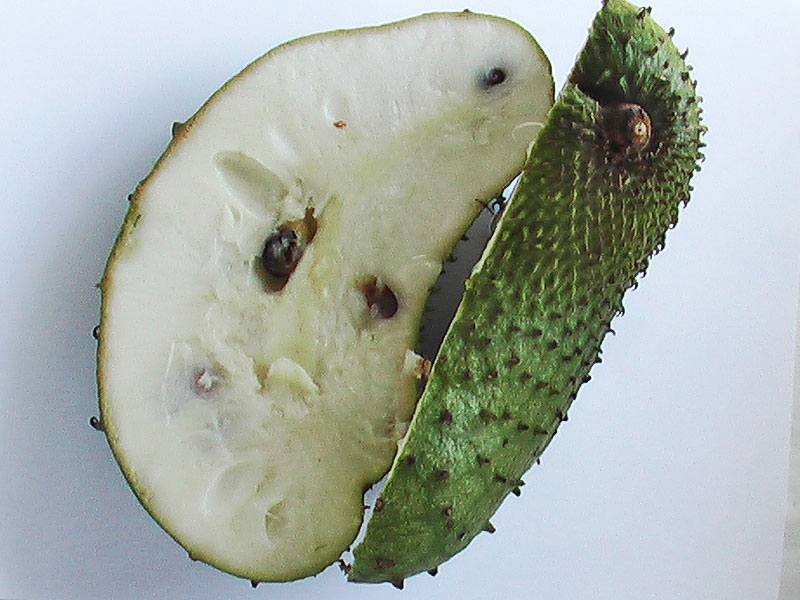
Soursop for Health Benefits

Soursop for Health Benefits - The following description of nutrient content and usability of fruit, flowers and seeds of soursop / tailings to health, especially for the treatment of cancer, hemorrhoids, liver disease, ulcers, eczema, rheumatism, lumbago.

Other names: Soursop (UK), corossol or Anone (France), Zuurzak (Netherlands) Guanabana (Spanish), graviola (Portuguese), Brazilian Paw Paw, Corossolier, Guanavana, toge-Banreisi, Bengal Durian, Jackfruit Blanda, and Jackfruit Londa .

Nutrient Content of soursop fruit is as follows:
Soursop fruit consists of 67.5 percent pulp, 20 percent of the fruit skin, fruit seeds 8.5 percent and 4 percent of the core pieces.
After water, the highest content of nutrients in the soursop is carbohydrates. One type of carbohydrate on soursop fruit is a reducing sugar (glucose and fructose) with levels of 81.9 to 93.6 percent of the total sugar content.
Soursop fruit contains very little fat (0.3 g/100 g), so it is good for health. Sour taste in soursop derived from non-volatile organic acids, mainly malic acid, citric acid, and acid isositrat.

Vitamins are the most dominant in the soursop fruit is vitamin C, which is about 20 mg per 100 grams of fruit flesh. Requirement of vitamin C per person per day (ie 60 mg), can be met only by consuming 300 grams of meat soursop fruit. The content of vitamin C is high enough on the soursop is an excellent antioxidant to boost the immune system and slow the aging process (stay young).
Dominant minerals are phosphorus and calcium, respectively by 27 and 14 mg/100 g. Both minerals are essential for the formation of bone mass, making it useful to form strong bones and prevent osteoporosis.

In addition to nutritional components, soursop fruit is also very rich in non-nutritional components. One of them is a lot of fiber-containing food (dietary fiber), which reached 3.3 g / 100 g of fruit flesh.
Consumption of 100 g of fruit flesh can meet 13 percent of food needs of fiber a day. Soursop fruit is a fruit that is rich in phytochemical compounds, so as to ensure that the fruits are very much beneficial for health.
Phytochemical compounds are likely to have health giving properties, although not all scientifically proven. Range of benefits for therapy, among others, soursop treatment of gallstones, antisembelit, uric acid, and increased appetite. In addition, the fiber content also serves to facilitate digestion, especially for the treatment of constipation (hard bowel movements).
Fruit juice (juice) soursop in the digestive system

Studies at Purdue University show that graviola leaf can kill cancer cells effectively, particularly cancer cells: prostate, pancreas, and lungs.

The results of some of the university's research to prove if the magic tree and its fruit can be:

  1. Attacking cancer cells with naturally safe and effective, without nausea, weight loss, hair loss, as happened in chemo therapy. 
  2. Protecting the immune system and prevent deadly infections. 
  3. Increased energy and improved physical appearance. 
  4. Effectively selecting a target and kill the bad cells from 12 different types of cancer, including colon, breast, prostate, lung, and pancreas. 
  5. Power works 10,000 times stronger in slowing the growth of cancer cells compared with adriamycin and chemo therapy is commonly used. 
  6. Unlike chemo therapy, this juice is only selectively hunt down and kill the bad cells and not harm or kill healthy cells.


Traditional prescription medicine with the following soursop
  • Treatment of Cancer. - 10 that old soursop leaves boiled in 3 cups of water until the remaining 1 cup, drink 2 times per day for 2 weeks. Soursop leaves are said to nature such as chemotherapy, even more remarkable because soursop leaves only kill cells that grow abnormally and allow cells to grow normally. 
  • Pain. 20 soursop leaves, boiled with 5 cups water to boiling until tinggal3 glasses, drink 1 a day 3 / 4 cup. 
  • Infant Diarrhoea. Soursop fruit is ripe. Soursop fruit is squeezed and filtered to take water, drenched diarrhea in infants as much as 2-3 tablespoons. 
  • Hemorrhoid. Soursop fruit is ripe. Squeeze to take water as much as 1 cup, and drink 2 times a day, morning and afternoon. 
  • Boils. Soursop leaves are still young enough, stick it in a place exposed to ulcers. 
  • Anyang-anyangen (Urinary Tract Infection).Half-ripe soursop and sugar to taste. Soursop peeled and boiled with sugar with 2 cups of water, filtered and drunk. 
  • Urine Bladder Pain. Half-ripe soursop fruit, sugar and salt to taste. All material is cooked compote made. Eaten plain, and performed regularly every day for 1 week in a row. 
  • Liver disease. Another fast food, only drink soursop juice for 1 week 
  • Eczema and Rheumatism. Mash until smooth soursop leaves and apply on the affected part 
  • Soursop flowers can be used to cure cataracts but how do I use belom tau. If I've got the recipe I will add here.